Oct 13, 2015

The Tønder Marsh, Denmark, Tønder, Nørresø, Starlings, October 2, 2015

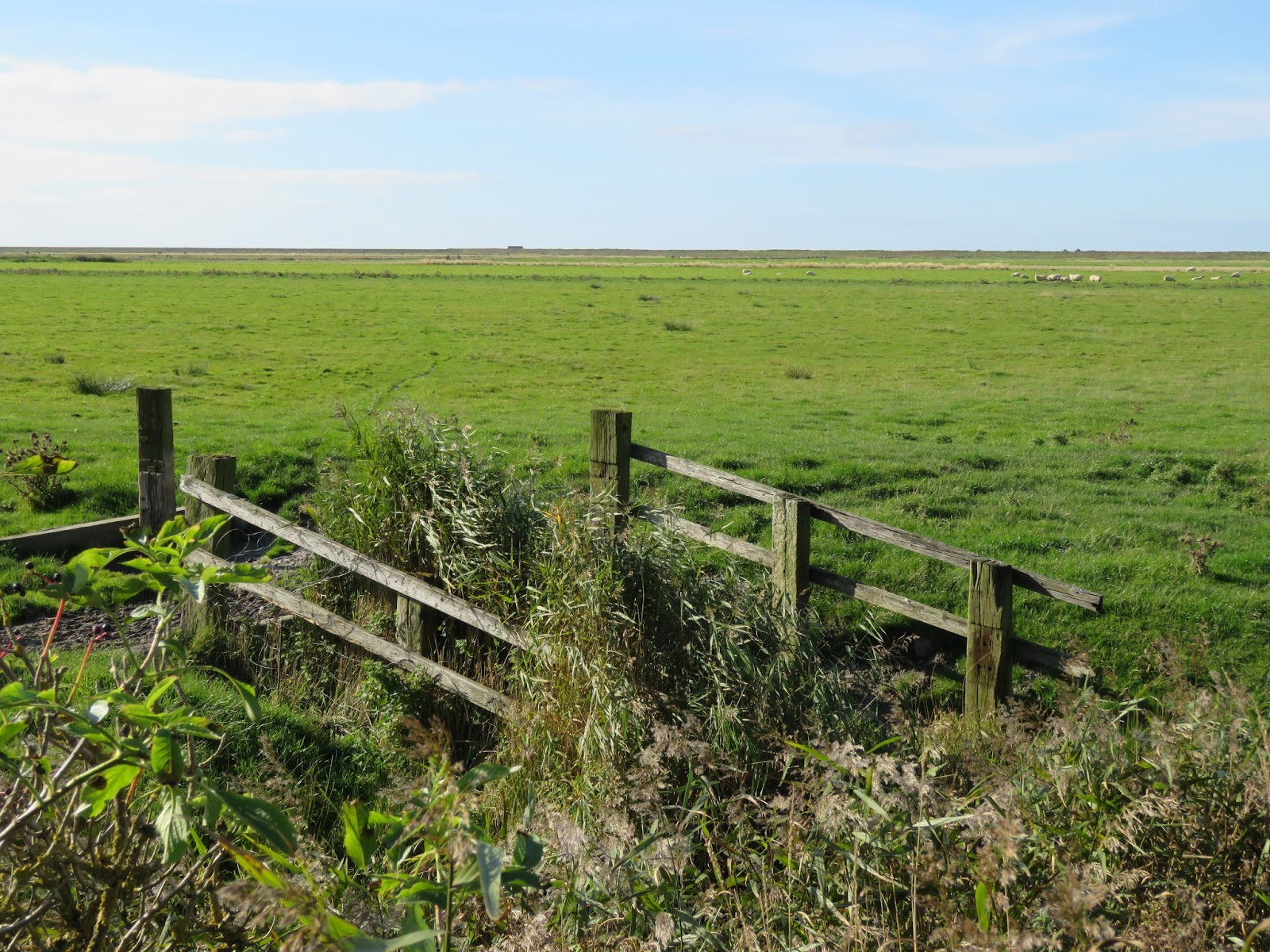
The Tønder Marsh is Denmark´s largest grassland and pasture area. It is characterized by fertile marshy soils and the constant threat of storm surges from the nearby North Sea. The Tønder Marsh form a unique cultural landscape. It is recently created by the sea, by deposits of clay and silt. It is a result of centuries of interaction between nature and humans.
We started the day with a canoeing trip on the River Vidåen from our house at Nørremølle
Tønder is a busy town with lots of shops and tourists. This picture is from one of the more quit streets, Uldgade.
Old map of Tønder. Tønder was originally the small port for a nearby village called Møgeltønder or the Great Tønder. Uldgade is Kaaber Gade on the map.
Uldgade – or the street of where garments were made of wool
Nørresø is created with EU funds. The lake is an extension of Vidåen. The aim is to restore spawning - and nursery areas for the rare species of fish Houting (Coregonus oxyrhynchus). A nature-restoration project, which is also beneficial to many other animal and plant species. Nørresø er skabt med EU midler. Søen er en udvidelse af Vidåen. Formålet er at gendanne gyde – og opvækstområder for den meget sjældne fiskeart: snæbel (Coregonus oxyrhynchus. Engelsk: Houting). Et natur-genopretnings-projekt, der også er til gavn for mange andre dyre- og plantearter.
Great Egret (Ardea alba). The Great Egret does not yet breed in Denmark, but is seen more and more often. Sølvhejre (Ardea alba). Sølvhejren yngler endnu ikke i Danmark, men træffes stadig oftere.
The train from Tønder to Germany passes an traditional farm . Originally it had its barn and stable in on end and living quarters in the other end.
The northern lapwing (Vanellus vanellus), also known as the peewit, pewit, tuit or tew-it, green plover or just lapwing in Danish just Vibe. The northern lapwing one of the birds that were most common in the Tønder Marsh during our visit. Viber
Bjerremark is a great marsh farm, which was first mentioned in 1685. In 1988 underwent Bjerre Mark a major renovation and restoration, and is used as a training center for Ecco Group. Bjerremark er en stor marskgård, der nævnes første gang i 1685. I 1988 gennemgik Bjerremark en stor renovering og restaurering og indrettedes til et kursuscenter for Ecco-koncernen.
LACK SUN – HUNDRED THOUSANDS OF STARLINGS IN THE SKY. Black Sun watching attracts thousands of tourists. Starlings roost in the reeds. Such large number of juicy prey attract many raptors. On the other side of the the red bed the shopping centers in Aventoft just next to the Danish-German border with hundreds of bird watchers. There is a symbiosis between the bird watchers and the starlings. The bird watchers scares the raptors and even more starlings are attracted to this place because it is relatively safe. Sort sol in the marsh near Tønder can occasionally comprise a formation with up to one million birds. Sort sol er et naturfænomen, der kan ses forår og efterår, når stære på træk samles i store flokke for overnatning. Lige før stærene går ned på jorden for natten, danner de store flokke mønstre på himlen, der næsten formørker solen, heraf navnet sort sol.
In Spring and Autumn huge numbers of migration starlings gather in the Tønder Marsh. They are looking for daddy long legs and garden chafer grubs in the wet meadows. At such time you can observe a fascinating panorama called “Black Sun” (Sort Sol). Sort sol takes place in the hours just after sunset. The birds gather in large flocks and form huge formations in the sky just before they decide for a location to roost for the night. The movements of the formations have been likened to kind of a dance or ballet and the birds are so numerous that they seem to obliterate the sunset, hence the term "sort sol" (Danish for "black sun"). Stærene, der ses i marsken er trækfugle, der forår og efterår er på vej til eller fra Skandinavien, Finland og Rusland, hvor de yngler.
Hundreds of thousands of starlings turn the sky black when they are circling around creating fascinating formations in the air before they land at dusk in an area covered with reeds. Several starlings descend on the same reed – the uppermost in danger of being caught by a bird of prey, while the lower ones might end with their feet in water. Stæren kommer til marsken for at æde stankelbens- og gåsebillelarver, som findes i store mængder i de fugtige græsarealer. Om dagen søger de især føde i de ydre, vestlige koge i Tøndermarsken, mens de om natten sover på tagrørene
Sunset over the Tønder Marsh
Cows in the evening fog near our house at Nørremølle

Oct 9, 2015

Holiday in the Tønder Marsh, Denmark, Noerremoelle, Thursday, October 1, 2015

The Tønder Marsh form a unique cultural landscape. It is recently created by the sea, by deposits of clay and silt. It is a result of centuries of interaction between nature and humans. The Frisians knew colonized the area in the Middle Ages and built their houses on dwelling mounds to protect them from flooding. The first people moved into Tønder Marsh in the 1100s. Until then lived population only the higher lands, as the marsh was regularly flooded. But people wanted to use the very fertile land more efficient and moved into the marsh by building farms and houses on artificial yards. People living in the marsh, however, was hard hit by the big floods in particular 1362 and 1634. They began to build dikes to protect against sea intrusion. Tøndermarsken er opstået som et resultat af århundreders samspil mellem natur og mennesker. Her finder man både en smuk natur, et rigt dyre- og fugleliv, og et gammelt kulturlandskab med smukke værftsgårde, diger og koge. Marskbefolkningen blev dog hårdt ramt af de store stormfloder i bl.a. 1362 og 1634. Stormfloden i 1362 kaldes ”Den store mandedrukning", og overleveringer taler om op til 200.000 druknede. Derfor begyndte man at opføre diger for at sikre sig imod havets indtrængen. Tønder, Ubjerg, Møgeltønder og Højer koge blev inddiget i 1556, og derefter fulgte Gl. Frederikskog i 1692, Rudbøl Kog i 1715, Ny Frederikskog i 1861, og senest Margrethekogen i 1982. I 1920erne blev Tøndermarsken afvandet for at fremme landbruget. Nørremølle er en bebyggelse i Tøndermarsken. Den ligger ved den gamle afvandingssluse fra Frederikskog. Husene ligger dels på det gamle havdige og dels på begge sider af diget henholdsvis i Gammel Frederikskog og Rudbølkog. Pumpestationen er opført 1929.
Common Crane (Grus grus), trane – We saw some these impressive birds as we approached our destination in the Tønder Marsh
The oldest surviving building in Nørremølle is Gottesgabe (The gift of god in German), which we rented. The house was built 1738. http://www.cottage-rental.com/11/8604sj-uk.htm#.VhVo7ZrsmPw http://www.bricksite.com/nm9og11 Den ældste bevarede bygning i Nørremølle er Gottesgabe, som vi lejede. Huset er bygget 1738.
Originally the people living in Nørremølle was working with the maintenance of dikes, ditches and looked after livestock. They lived off fishing, as tansport by boat on the Vidå and they also did some farming. The houses are built after the establishment of Old Frederikskog in 1692 and Rudbøl Kog in1715. I ældre tid arbejdede beboerne i marsken med vedligeholdelse af vandløb og opsyn med kreaturer. Ved siden af levede de af fiskeri, som bådmænd og havde desuden lidt landbrug. Husene er bygget efter inddigninger i henholdsvis 1692 (Gammel Frederikskog) og 1715 (Rudbøl Kog).
The Tønder Marsh is Denmark´s largest grassland and pasture area. It is characterized by fertile marshy soils and the constant threat of storm surges from the nearby North Sea. The people living in this area have to adapt to these conditions. De første mennesker flyttede ud i Tøndermarsken i 1100-tallet. Indtil da boede befolkningen kun på gestranden ud mod marsken. Det var bl.a. friserne, der tog marsken i besiddelse og opførte gårde og huse på kunstigt anlagte værfter.
Nørremølles is uniquely located on the dike. The small village appears visually as entity because similar building style and the trees that will surround the houses. Nørremølles beliggenheden på selve diget, hvor husene ligger tæt og "trykker sig fast" mod digekronen og digekanten, er helt unik i Danmark. Husenes homogenitet er vigtig, og den lille landsby fremtræder også visuelt som en tæt helhed blandt andet på grund af den træbevoksning, som omgiver husene.
Mute svan (Cygnus olor), Svane. The wet marsh meadows provide the basis for a rich birdlife. Waders and ducks have good breeding grounds and large flocks of birds feed on the meadows during their migration. Many geese and swans breeding further north are staying in the area during the winter. De fugtige marskenge giver grundlag for et rigt fugleliv. Vadefugle og ænder har gode ynglepladser, og der raster store flokke af fugle. Mange gæs og svaner overvintrer i området.
The land behind the dikes was called “kog”. The first three kogs, around the town of Tønder, was diked in 1556. Because of land sinking and sea rising they are now all three below sea level. Then followed Gl. Frederikskog in 1692, Rudbøl kog in 1715, New Frederikskog in 1861, and later Margrethekogen in 1982. Vandet i grøfterne giver drikkevand til kreaturerne og adskiller de enkelte fenner, så hegn er overflødig.
River Vidåen
Some inquisitive nature carers Nogle nysgerrige naturplejere
It is defined by law that the old mode of operation with grazing shall be maintained. Ditches is used both to dewater and irrigate fields. In spring and summer the ditches is filled with water from the Vidå River. Det er fastlagt ved lov at den gamle driftsform med græsning, hvor kanalerne bruges både til at afvande og bevande markerne. I foråret og om sommeren bliver grøfterne vandfyldte ved hjælp af stemmeværker.
View from our house to the Vidå River and Nørremølle pumping Station. In 1920, dikes were build along the whole of the main river “Vidåen” and Tøndermarsken was drained by pumping to promote agriculture. Udsigt fra vores hus til Vidåen og Nørremølle pumpestation, Pumpestationen blev bygget i 1926 ved inddigningen af Vidåen og afvandingen af Tøndermarsken. Pumpestationen ved Nørremølle udpumper vandet fra Højer kog, Rudbølkog og Gl. Frederikskog, men kan også afvande dele af Møgeltønderkog.
The greylag goose (Anser anser). Grågås
Oystercatcher and shelduck ready for the night at Højer Sluice. Strandskade og gravand går til ro ved Højer Sluse
We lived close to the old port city Højer. In the 1600s, when the main city in the marsh, Tønder, completely lost contact to the sea, developed Højer itself as a major port at Vidå mouth. Vi boede tæt ved den gamle havneby Højer. I 1600-tallet, da Tønder helt mistede kontakten til havet, udviklede Højer sig som en vigtig havn ved Vidåens munding.

Sep 8, 2015

Deer and bird of prey seen from my living room, Monday, September 7, 2015

Fallow deer (Dama dama), dådyr
Western marsh harrier (Circus aeruginosus), rørhøg
Western marsh harrier (Circus aeruginosus), rørhøg. One of a family of 4 western marsh harriers just outside our house.
European Roe Deer, also known as the Western Roe Deer, chevreuil or just Roe Deer (Capreolus capreolus), rådyr. Mother and two teenagers. September 12, 2015

Aug 24, 2015

Along the south coast of Langeland from Dovns Klint to Bagenkop, August 22, 2015

We went from Dovns Klint to Bagenkop, where we had a delicious lunch with everything from the little local fish shop: Fiski (fish cakes, smoked mackerel, smoked pepper salmon and smoked garlic salmon) - DELICIOUS!
Dovns Klint
Langeland is a highway for bird migration - and the fall bird migration is in full swing
And it is also time for angling
Bagenkop

Aug 15, 2015

The award of the 2015 Ørsted Prize, 14 August 2015, Langeland, Denmark

The H.C. Ørsted International Award for Art and Science is ordained by Hans Christian Ørsted Company and Langeland Municipality, and is awarded every year on August 14 at HC Ørsteds birthday. Hans Christian Ørsted is the most famous son of Langeland Hans Christian Ørsted (14 August 1777 – 9 March 1851) was a Danish physicist and chemist who discovered that electric currents create magnetic fields, an important aspect of electromagnetism. H. C. Ørsted grew up in Rudkøbing on Langeland, where his father was a pharmacist. He shaped post-Kantian philosophy and advances in science throughout the late 19th century. In 1824, Ørsted founded Selskabet for Naturlærens Udbredelse, a society to disseminate knowledge of the natural sciences. He was also the founder of predecessor organizations which eventually became the Danish Meteorological Institute, the Danish Technical University and the Danish Patent and Trademark Office. As one of the leaders of the so-called Danish Golden Age, Ørsted was a close friend of Hans Christian Andersen and the brother of politician and jurist Anders Sandøe Ørsted, who eventually served as Danish prime minister. Klaus Høeck got the Ørsted Prize 2015. He is an experimental poet, and Klaus Høeck was awarded the Hans Christian Oersted Prize for his poetry where the spirit of nature appears in descriptions of phenomena, wording and thinking.
The theater room of the H. C. Ørsted Pavilion. The pupils from the 10th grade was ”invited” to the award
Klaus Høeck reads some of his poems. Klaus Høeck was awarded the Ørsted Prize 2015.
Not all the 10th grade pupils payed attention to the poems – maybe there were too advanced for them to understand – personnaly I had some problems in my understanding.
A coffee break before the next point on the agenda
The mayor introduces the agenda
The artist Sabine Majus Hansen, Langeland. The price is 10.000, - kr., and a statuette named "Butterfly" and a corresponding diploma by Sabine Majus Hansen.
The head of H. C. Ørsted association informs about its activities and plans.
Professor Claus Michelsen, the H. C. Ørsted association presents the Prize to Klaus Høeck