May 23, 2010

Tbilisi Reservoir 23 May 2010


On our way to the reservoir we followed the Kura river. It is high flow season.


The way along the reservoir on the north side has very limited traffic and nice views.


View over the eastern part of the reservoir.


And from the same spot the vow over some characteristic soviet apartment blocks.


Sunday Vlado and agreed on another trip to the Tbilisi Sea, the reservoir for drinking water supply just north of the town. To get to Tbilisi Sea we have to cross some of the main roads of the town both on our way out and back, not so pleasant.

The weather was changing and we had nice weather for the trip along the reservoir, but on our way back the rain got very heavy, and we were soaked when we were back.

May 13, 2010

Vashlovani Protected Areas, 8 - 9 May 2010


Dima asked the locals in Kasristskali, on how to get to the park centre. Their advice gave us some trouble!


And then we were stuck for good.


It took us more than an hour of pushing to get up of the hole.


A toad living in the water filled track observed our work.


The view over the park from the "wrong" entrance.


The Azeri farm, where Dima asked for direction, but they never had heard about the existence of the park.


At last ready to explore the park from our bikes


In Vashlovani the most characteristic plant is the Pistado tree known among the people as "sagsagaj" - an Azeri name. They grow here at natural intervals of 15-20 meters. Due to such wide spacing, as well as its resemblance to apple trees the site was given a name Vashlovani, meaning in Georgian garden of apple trees.


Characteristic for Vashlovani is cliffs-of-the-canyons, known in the area as the "Sharp Walls"


Among the many species of small birds are the colourful Bee-eaters


Sunset over the park


Sunday morning we were on our bikes again at sunrise.


In the background the newly build Visitor centre.


One of the rangers advised us not to bike because we would be attacked by snakes and the big herding dogs, which can scare the common wolves away. We did not see any snakes but he was right about the herding dogs. Here a more peaceful one.


One of the rare animals that has not disappeared before you have your camera ready.


Vlado and I had for some months planned to visit Vashlovani Protected Areas in the very Eastern part of Georgia, surrounded by Azerbaijan. We started Saturday morning at 6 am because we wanted to use the weekend efficiently. We wanted to cycle in the park so brought our bikes with us in Dima’s Ford Transit.

Vashlovani Protected Areas is notable for its unique, bad-land-like areas of desert and semi-desert steppe vegetation and arid and deciduous forests. It's also home to the great cliffs-of-the-canyons.

The park administration is situated in Dedoplistskaro 70 kilometres from Vashlovani Protected Areas. In the park administration we got the permit to enter the area and rented bungalows in the Visitor Centre situated in the centre of the park. She also explained Dima which way to drive there, but not very successfully as we found out later.

The 60 kilometres from Dedoplistskaro to the last village before the park, Kasristskali was a time consuming and not so pleasant part of the trip. The road had been covered with asphalt in soviet times, but now only deep potholes remained, so it.

When we entered Kasristskali, we could choose between several different dirt tracks. Our map of the reserve informed to drive through the town and continue, but a sign at the entrance to the town recommended us to drive to the right instead. First we tried one of the dirt roads according the map but it ended in a farm. So instead of trying one of the other dirt roads in the same direction we decided to follow the advice of the locals and the official sign.

It had been raining heavily the previous days so after a short while we reached a section where the dirt road tracks were filled with water. Dima speeded up to get through but the result was that we got stuck in the middle of the water hole. After more than one hour of pushing we miraculously managed to get the car free, just to get stuck in another hole a few minutes later, and here none of our efforts could help us up.

Fortunately four drunken men in a soviet Gaz jeep appeared, and without any discussion they stated helping us up by dragging and pushing our car.

Soon after the road ended at a ranger station where the park started. The rangers told us that it was not possible to get to Visitor Centre through the park from there, and that we had to drive back, and soon after we were stuck in the same (second) mud hole. Luckily the same Gaz jeep (now only with two drunken men) appeared again and dragged us free.

We avoided our first mud hole by taking a shortcut to the dirt road which leads to the Visitor Centre.

Shortly after we reached a farm (which we later found out was the last before the park), and Dima asked three women at the farm if we were driving in the direction to the park centre. The women were Azeri, and did not understand Georgian very well and did not know about the existence of the park. They informed Dima that as far as they knew the road lead to Azerbaijan. Fortunately a Georgian couple in a four wheel drive stopped to help us. They said that they were also on their way to the park, and we were on the right track. They drove ahead, and when we got stuck for the fourth time they dragged us up.

At last after a 12 hours trip we reached the nicely situated Visitor Centre with a friendly ranger and nice bungalows.

Vlado and I immediately got on our bikes and managed to do a couple of hours cycling in the fantastic nature before it got dark.

Next morning we started again at 6 am to enjoy the sunrise and after four hours of cycling we packed our things started our trip back at 11 am. At 4 pm we were back after 5 of driving instead of 12.

The park was just as fantastic as we had expected. Here the steppes turn to shrubbery, deserts transfer into light forests. The big diversity in the natural conditions high productivity results in a high diversity and density of plants, insects, reptiles, birds and mammals.

May 3, 2010

Lower Kartli, 2 May 2010


At the start of our trip the weather was OK


Everywhere in Georgia you see herds of cattle or sheps with their herdsmen


The worn down restaurant in the former soviet shopping mall


When we reached the Algeti reservoir the we were so wet that we ready to give up


Our new Georgian friend, David, helps us getting our bikes out of his car


After a previous weekend with heavy rain, the weather forecast for Sunday did not look to bad so Vlado and I decided that it was time for the first cycling event of the season.

We decided to go to the region of Lower Kartli, just south-west of Tbilisi. Dima drove us to the mountains outside of the town (we just managed to pack ourselves and our bikes in his old VW Golf).

The clouds were a little bit low but we stated our cycling in a good mood.

After a couple of hours cycling in the nice landscape, we reached a town, where we found something like a restaurant (in a very worn-down previous soviet mall), but with friendly service and nice khatchapuri.

An hour after we stated cycling back towards Tbilisi it started raining, and after some hours it was pouring down. We were out of coverage of our mobile phones, so we could not phone Dima and asked him to pick us up. We tried to get with the last minibus for Tbilisi, but it was not able to take our bikes.

Then we stopped a Ford Transit van and asked the driver how much he would charge us for driving us and our bikes to Tbilisi. He said that he would be happy to drive us there, but would not accept any money for it, so he drove us through the rain to our place in Tbilisi – a very nice example on the famous Georgian hospitality.

Apr 15, 2010

Istanbul 3 – 6 April 2010


View from our hotel, Hagia Sofia – dawn.


The Blue Mosque


The Blue Mosque, one of the domes


The Blue Mosque, to the left the mihrab marks the direction to Mekka and to the right the minbar used by the iman when he delivers the Friday sermon


Hagia Sofia


Seraphim mosaics (God's protector angels with 6 wings)


Jesus


Maria with Jesus and empress Irene


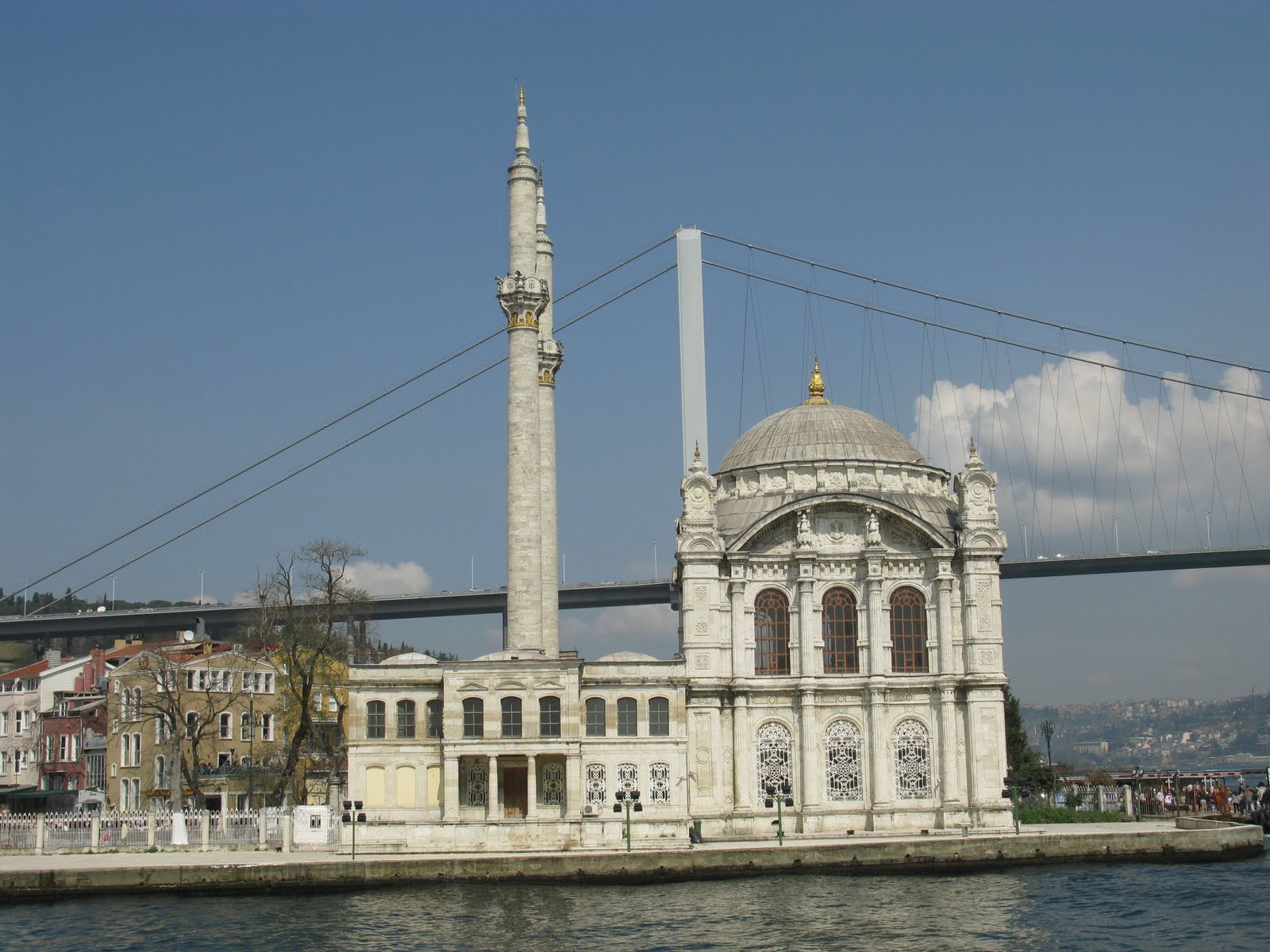
A cruise up and down the Bosporus trip is one of the great pleasures of a visit to Istanbul. The picture shown the Mecidiye mosque in baroque style and the Bosporus bridge.


Topkapı Palace was the official and primary residence in the city of the Ottoman Sultans for 400 years of their 624-year reign, from 1465 to 1856. Initial construction began in 1459, ordered by Sultan Mehmed II, the conqueror of Byzantine Constantinople. The palace is a complex made up of four main courtyards and many smaller buildings. At the height of its existence as a royal residence, the palace was home to as many as 4,000 people. Topkapı Palace gradually lost its importance at the end of the 17th century, as the Sultans preferred to spend more time in their new palaces along the Bosporus.


When you enters the private part of the Topkapi palace (the harem) you first enters the courtyard of the black eunuchs


The Imperial Hall was the largest room in the harem and used for entertainments. The picture shows the throne, from which the sultan could view the proceedings.


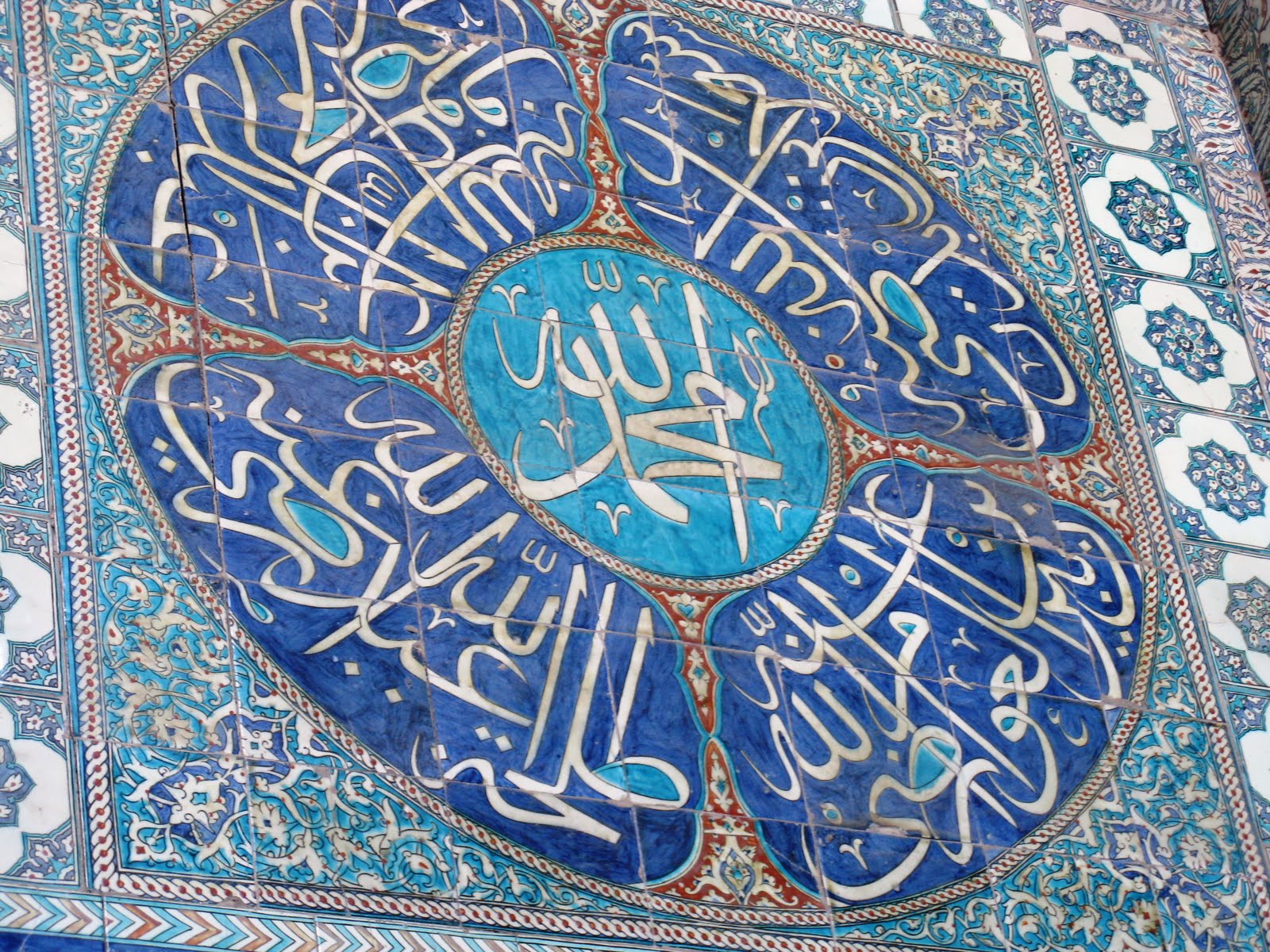
Topkapi Palace is among other things famous for its Iznik tiles.


34: Fishing is a popular pastime. Here from over bridge over the Golden Horn, the natural harbour – the main reason for placing a city here.


Spices marked

Lisbeth went back to Denmark together, and as we flew via Istanbul, we decided to spend a couple of days in the town, where we had never been before.

We had reserved a nice hotel in the tourist area (Sultanahmet) with a short walk to the old bazaar and three of the main tourist attractions: Hagia Sofia (for several centuries the biggest Christian church, after the conquest of the ottomans mosque and now museum), the Blue Mosque and the Topkapi palace.

Apr 1, 2010

Kakheti, 24 - 26 March 2010


When my wife came to visit me we decided to visit the Alazani Valley in Kakheti east of Tbilisi. Kakheti divided in two by the Gombori Mountains shaping Iori Valley on the west and the Alazani Valley on the east.

Alazani valley is famous (at least in Georgia) for its wine. According the official tourist homepage wine is everything to a Kakhetian - it is the purpose of his life, it is his pride, his hope and his main source of income.

The Alazani Valley is beautifully situated between the Gombori and Caucasus Mountains.

We did not put so much emphasis on the wine as on the exploring the valley and its many churches and monasteries, including the impressive Alaverdi monastery.

The first two days it was cold with limited visibility but the last day the sun was shining and the sky was clear.